How Spotify Listening Stats Work: Top Artists, Time Windows & Why They Seem Off
Short answer: Spotify ranks your top artists, tracks and genres over fixed time windows: roughly the last 4 weeks, the last 6 months, and a long-term window. The rankings are based on how much you listen in each window, which is why a song you played all summer can disappear from your "recent" list.
Below you'll find how those windows work, why your stats often feel wrong, and what drives your recommendations.
How does Spotify decide your top artists?
Your top lists depend on the time window Spotify analyzes:
- Last 4 weeks: Your current obsession. Best for spotting new releases you're into.
- Last 6 months: Your steadier habits.
- Long term: Your lasting favorites. This covers a longer stretch of listening, not necessarily your whole history.
This is why an artist you played non-stop two months ago can sit high in your 6-month list and vanish from your 4-week list.
Listening is counted per play, and a play only counts once you've passed the 30-second mark. We cover the details, including skips, repeats and offline plays, in what counts as a listen on Spotify.
Why don't my stats match what I remember?
Spotify's stats can feel like a black box. A few things quietly skew them:
- Ambient listening: Music at work, at the gym or while you sleep keeps racking up plays for the same artists.
- Track spreading: Remixes, live versions and alternate takes often count as separate tracks, so your love for one artist is split over several entries.
- Shared or mood playlists: Plays from a playlist go to the artists on it, even if you weren't paying attention.
- Streams vs. minutes: A fast skipper can have a low play count but plenty of minutes. See how to see your minutes listened on Spotify for the difference.
What does Spotify use for recommendations?
Top lists are driven by listening, but Discover Weekly and Release Radar use a wider set of signals:
- Saving a song to your library or a playlist
- Liking a track
- Skipping: Repeated skips are a strong negative signal
- Following an artist
These combine with your listening into the profile behind your recommendations.
Does Spotify Wrapped use the same numbers?
Wrapped covers a set period of the year rather than all 12 months, and Spotify chooses the exact cut-off each year. If you don't want to wait for the end of the year, read how to see your Spotify Wrapped stats all year round.
See your stats in one place
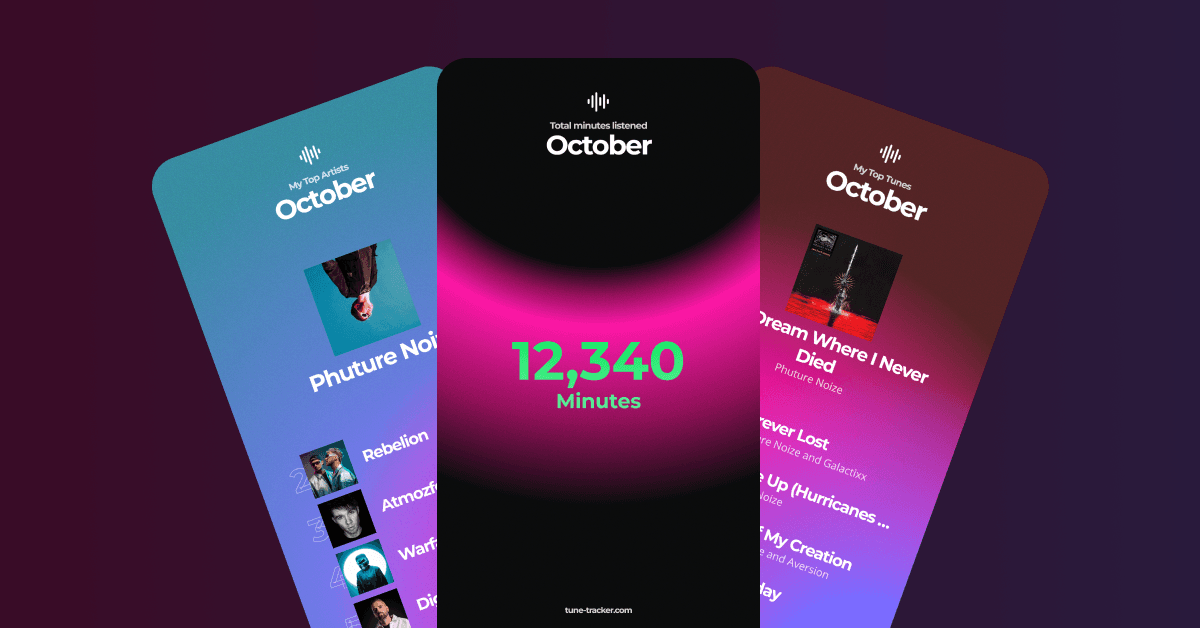
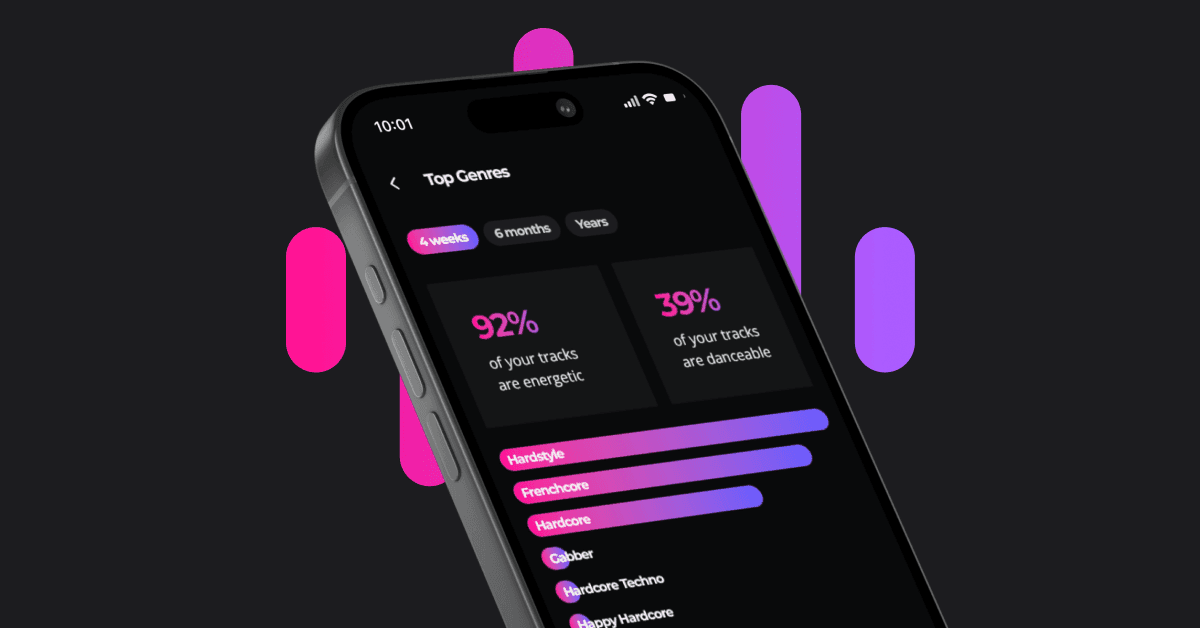
Once you log in to Tune Tracker, your dashboard breaks down your listening across the same windows: last 4 weeks, last 6 months and long-term history. You can also see:
- Your top genres for each period
- Audio feature analysis: The average danceability, energy and acousticness of what you play most
Want to hear about new music from the artists behind those stats? Try our song tracker and get new releases from your favorite artists automatically.
FAQ
By how much you listened to each artist within a time window: roughly the last 4 weeks, 6 months, or a long-term period.
Check the time window, ambient listening, shared playlists and tracks split across remixes or live versions.
No. They show rankings, not exact numbers.
Not exactly. It covers a limited recent period, not your full history.